Why Graves Aren't Forever: What Burial Customs Around the World Reveal About Memory
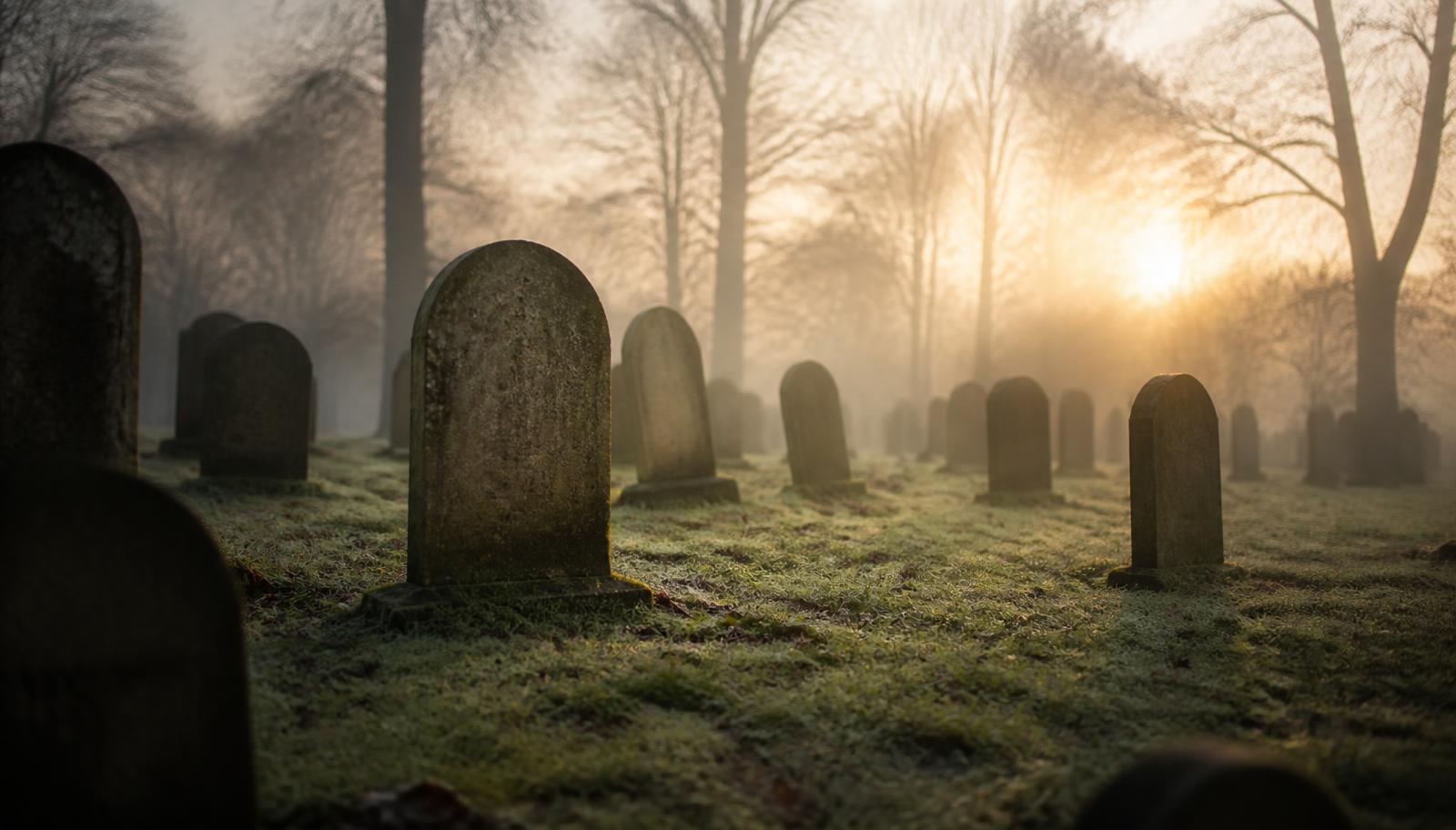
Most of us carry a quiet assumption: that a grave is forever. A stone with a name on it, standing in the same place for centuries, waiting for descendants who might one day come looking.
It is a comforting picture. In most of the world, it is also simply not true.
In the majority of countries a grave is not bought — it is leased. For three years, fifteen, twenty-five, fifty. When the lease runs out and no one renews it, the stone is removed, the ground is reused, and the name disappears from the landscape.
This is not a scandal or a failure. It is how humanity has always managed a practical fact: land is finite, and the dead keep coming. But once you see how universal it is, one question becomes impossible to avoid.
If the grave was never the permanent part, what is?
Greece: the family that digs together
Nowhere is the temporary grave more visible than in Greece. In Athens, Thessaloniki and most Greek cities, a burial plot is rented for three to five years. When the lease expires, exhumation is not a bureaucratic afterthought — it is a family ritual, and attendance is expected.
The remains are lifted from the earth and the bones are washed with wine, a symbol of blood and remembrance, sometimes anointed with oil for healing and immortality. They are placed in a small metal or wooden box and moved to an osteofylakio, an ossuary lined with shelves, each box marked with a name and two dates. Families visit. Some open the boxes. Some ask a priest to bless the bones.
And if the family stops paying the ossuary's annual fee? In many municipalities the bones are moved to a communal pit and dissolved. Nothing remains.
The ritual can look shocking from the outside. Greeks would say they are simply being honest about something the rest of us prefer not to think about.
Germany: resting time, with an expiry date
Germany runs one of the most orderly grave-lease systems in the world. Every grave comes with a Ruhezeit — literally a "resting time" — typically 15 to 30 years for a coffin burial, often shorter for urns, depending on the municipality.
When the period ends, families can usually renew for another fixed term. But renewal requires someone alive who remembers, cares, and pays. Two or three generations on, that someone often no longer exists. The grave is cleared, the headstone removed, the plot returned to circulation.
Germans do not consider this disrespectful. They consider it orderly: the cemetery serves the living community indefinitely precisely because no single grave does.
Singapore: fifteen years, by law
Singapore takes the logic to its conclusion. With nearly six million people on 734 square kilometres, land cannot be spared for eternity. Since 1998, every burial in the country's one remaining active cemetery is limited to 15 years. After that, exhumation is mandatory, carried out in phases by the authorities, with remains usually cremated and moved to a columbarium niche.
Entire historic cemeteries have already been cleared for housing and infrastructure. For Singaporean families, planning a funeral means planning the transition fifteen years later, too.
Hong Kong: six years
Hong Kong is more compressed still. In public cemeteries, remains must generally be exhumed after six years and then cremated or reinterred. Waiting lists for permanent private plots run for decades, and prices rival luxury real estate. In one of the densest cities on earth, even the dead compete for square footage.
Spain and Latin America: a niche in the wall
Across Spain and much of Latin America, the classic resting place is not a plot in the ground but a nicho — a niche in a tall concrete wall of stacked compartments, rented for a term of years. When the lease lapses and no one renews, the remains are moved to a communal ossuary and the niche is reused.
In New Orleans, shaped by Spanish and French tradition, the famous above-ground tombs work on the "year and a day" principle: after at least a year, the tomb may be opened for the next family member, with the previous remains swept into a receptacle below. One tomb, many generations.
France and the Netherlands: concessions with a countdown
France grants grave concessions of 10, 30 or 50 years; perpetual concessions exist but are increasingly rare and expensive. The Netherlands typically leases graves for 10 to 20 years. In both countries the pattern is identical: when the term expires and the family does not renew, the municipality reclaims the ground.
Even the catacombs of Paris are a monument to impermanence — created in the eighteenth century when the city's overflowing cemeteries were emptied and the bones of some six million Parisians were stacked, anonymously, in old limestone quarries beneath the streets.
The United Kingdom: running out of room
Britain long resisted grave reuse, but arithmetic is winning. London's cemeteries are approaching capacity, and legislation now allows certain graves older than 75 years to be reclaimed by the "lift and deepen" method: the original remains are reburied deeper in the same plot, making room for a new burial above. The old name may share the stone with a new one — or make way for it entirely.
Madagascar: dancing with the ancestors
Not every culture treats exhumation as a sad necessity. In the highlands of Madagascar, the famadihana — "the turning of the bones" — is a celebration. Every five to seven years, families open the ancestral tomb, rewrap their ancestors in fresh silk shrouds, and dance with the remains to live music before returning them to rest. It is a family reunion where the departed are the guests of honour.
The Malagasy understanding is striking: the dead remain part of the family for as long as they are remembered, touched, spoken to. Memory is not passive. It is something you do.
Japan and South Korea: ashes, columbaria and the 60-year rule
In Japan, cremation is nearly universal — around 99.97 per cent — and family graves hold the urns of generations. Even these face the modern problem of muenbotoke: abandoned graves with no descendants left to tend them, which temples increasingly clear. High-tech urban columbaria now deliver urns by robotic arm when a relative swipes a card.
South Korea confronted its shortage directly. A law passed in 2001 caps new graves at a maximum of 60 years, after which remains must be cremated or reinterred. Within a single generation, the country moved from a burial culture to a cremation culture.
The great exception: North America
If you grew up in the United States or Canada, all of this may sound alien — because North America is the outlier. The norm there is the perpetual plot: bought once, held forever, protected by law.
But "forever" comes with an asterisk. Perpetual care funds keep the lawn mowed; they do not keep anyone visiting. Studies of cemetery visitation suggest most graves receive their last regular visitor within two generations. The stone remains; the stream of people who knew the person dries up.
The permanence of granite is not the same as the permanence of memory.
What every culture is really telling us
Lay these customs side by side and one pattern emerges.
The grave was never the point. Remembering was.
The Greeks wash the bones because touching is remembering. The Malagasy dance with their ancestors because celebration is remembering. Germans, Dutch and Singaporeans renew leases because paying attention — literally — is remembering. And everywhere, the moment remembering stops, the physical marker follows: reclaimed, reused, dissolved, anonymised.
Every gravestone in the world is on a countdown that ends when the last person stops showing up.
Which raises a question our generation is the first that can answer differently: what if the memories did not have to live at a physical address at all?
A resting place for the part that matters
The stories. The photographs. The sound of a voice. The recipe only she made properly. The joke only he told. None of that was ever in the ground. It lives in the people left behind, and it has always been the most fragile part of the inheritance — passed mouth to mouth until, quietly, it wasn't.
That is why we built MemWall: a digital memorial page where a life's stories, images and voices are gathered in one place. One that does not depend on a lease, a plot, or a descendant with a watering can. Family and friends anywhere in the world can visit, add the memories only they hold, and pass the whole of it on intact.
It costs nothing to create, and it is not on a countdown.
The Greeks are right: the grave is temporary. Everywhere, for everyone.
The memory does not have to be.
Create a free memorial for someone you love
How long does a grave last in Greece?
Burial plots in Greek cities are typically rented for three to five years. After that, exhumation is mandatory and the bones are moved to an ossuary, where the family pays an annual fee to keep them.
Are graves permanent in Germany?
No. German graves come with a Ruhezeit (resting period) of roughly 15 to 30 years, renewable for a fee. Graves that are not renewed are cleared and the plot is reused.
What happens to graves in Singapore after 15 years?
Since 1998 all burials are limited to 15 years. Graves are then exhumed by the authorities and the remains are usually cremated and placed in a columbarium niche.
Are graves in the United States permanent?
Usually yes. The US is one of the few countries where perpetual burial plots are the norm. But perpetual care covers grounds maintenance, not remembrance — most graves stop receiving regular visitors within two generations.
What is famadihana?
Famadihana, "the turning of the bones", is a Malagasy tradition in which families exhume, rewrap and celebrate with their ancestors' remains every five to seven years as an act of love and remembrance.
How can I make sure a person's memory outlasts the grave?
Gather the things that were never in the ground: photographs, written stories, recorded voices, and the memories other people hold. A digital memorial keeps them in one place that anyone in the family can visit and add to, independent of any burial lease. Some families also link the two worlds with a QR code on the gravestone, so a visitor at the stone can reach the whole story.