How to Write a Letter to Your Future Self (and Make Sure It Arrives)
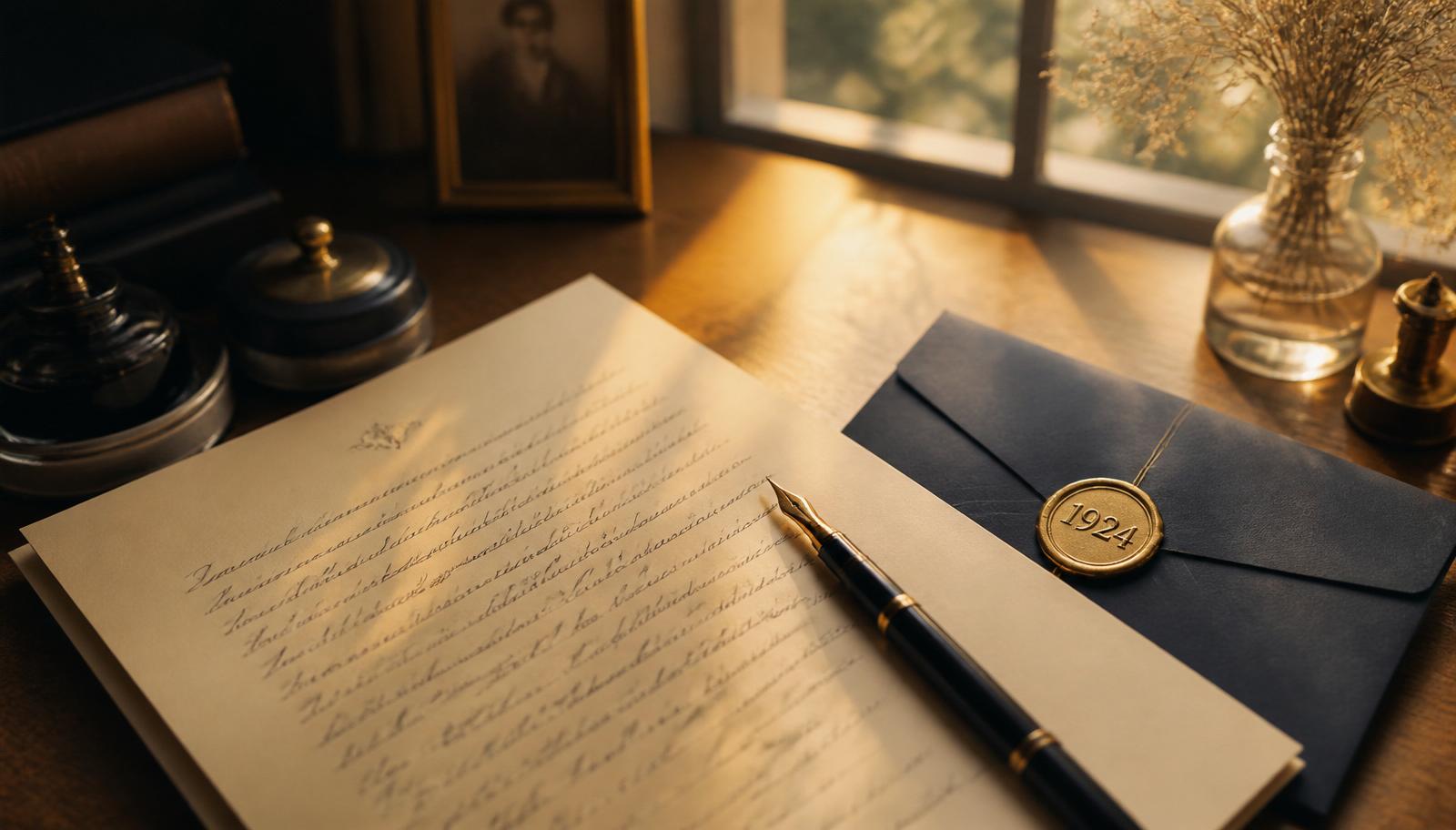
A letter to your future self is a quiet act of legacy — a message from who you are today to the person you're becoming. It captures a moment in time you'll want back, and it gives future you the perspective, encouragement, or gentle challenge only past you can offer. A letter is the classic form, and the one this guide is built around — but the same message can just as easily be spoken into a camera or recorded as a voice note. The words matter more than the medium.
This guide walks you through what to write, how to write it, and how to make sure it actually arrives on the day you intend. It sits inside a larger practice we've written about in the complete guide to digital time capsules — a letter is one of the simplest, most personal ways to start.
Why Write to Your Future Self?
A benchmark for growth
It's hard to see how far you've come in real time. A letter from your past self makes progress visible — challenges you overcame, worries that resolved themselves, the version of you that grew up.
A dose of perspective
When future you opens the letter, they meet the hopes and fears of an earlier you. That can bring clarity, comfort, or a reminder of what actually matters.
Rekindling dreams and intentions
Goals fade under daily life. A letter is a quiet nudge back toward the person you meant to become.
A form of self-care
The writing itself is the practice. It slows you down, makes you honest, and gives you a moment that belongs only to you.
What to Include: Prompts for Your Letter
Your current life snapshot
- What does a normal day look like right now?
- What are you most proud of this year?
- What are you struggling with?
- Who matters most to you, and why?
Your hopes for the future
- What are you working toward?
- What do you hope life looks like when the letter arrives?
- What experiences do you still want?
- Who do you hope you've become?
Advice and reflections
- What advice would you give your future self?
- What values feel non-negotiable right now?
- What would you ask future you, if you could?
- A gentle dare — a promise you want to be reminded of.
Small details worth preserving
- A song, book, or film that's meaning something to you right now.
- An inside joke, a phrase you keep saying.
- A recent event, personal or global, that shaped you.
If you'd rather speak it
Some things are easier said than written. If you record a short video or voice note instead of — or alongside — the letter:
- Say the date out loud at the start. Future you will want the timestamp.
- Describe what's just outside the frame: the room, the weather, who's in the next room.
- Say one thing you'd feel slightly embarrassed to write down.
- End by asking future you a question. It makes the recording feel like the start of a conversation rather than a monologue.
Tone and Style
There's no correct style. A few things help:
- Write in your real voice. Future you will notice if you're posturing.
- Be specific. "I hope I'm still walking every morning" lands harder than "I hope I'm happy."
- Be kind. Life is hard enough without a scolding from your past self.
- Don't overthink it. Perfect writing isn't the point. Honest writing is.
Delivering It: Why a Digital Memory Capsule Works
A paper letter is lovely, but it has to survive years of moves, drawers, and forgotten hiding places. A MemWall memory capsule is designed for exactly this — a letter that waits, encrypted, until the date you chose.
What it gives you:
- Scheduled, automatic delivery. You set an unlock date — one year, ten years, twenty-five years — and the capsule is delivered on that date via email notification to the recipient(s) you chose. To make sure it reaches future you, use a long-lived email address (Gmail, iCloud, Outlook) and keep your profile up to date if it ever changes.
- Richer formats of the same idea. The letter is the core. But you can also attach a photo of the room you're sitting in, a short video, or a voice note — the same message, in a form that carries your face and your voice as well as your words.
- Encrypted storage. Content is encrypted with AES-256-GCM. It stays sealed until the unlock date.
- No physical upkeep. Nothing to lose, nothing to hide, nothing to accidentally throw out during a move.
- Send to others too. The same capsule format works for messages to children, partners, or friends — a birthday twenty years away, a graduation, a wedding day.
How to send your letter as a memory capsule
- Write the letter. Type it directly into MemWall, or paste it in from wherever you drafted it.
- Add media. A photo, a short video, a voice note. Anything that captures the you of right now.
- Pick a meaningful unlock date. A milestone birthday, an anniversary, or simply "ten years from today."
- Set yourself as the recipient. Use an email address you'll still have in the future. Update your MemWall profile if it ever changes so we can still reach you.
- Seal and send. Once sealed, the capsule waits — encrypted — until its date.
The letter that becomes something else
Most letters to a future self are written for one reader: you, later. But a letter written at 34 and opened at 54 has a habit of outliving its purpose. It stops being a note about your goals and becomes a record of who you were — the small worries, the phrasing, the handwriting of your thinking.
That is why it is worth writing the letter as if someone else might one day read it. Not performing for an audience, but not stripping out the context either: name the people, say where you lived, explain what the year felt like. Future you will not need the explanation. Anyone who reads it after you will.
If that thought resonates, the same practice scales: a letter to a child to be opened at 18, a message to a partner, a recording of your voice explaining a family story nobody else knows. The complete guide to digital time capsules covers how those longer-horizon messages are sealed and delivered.
Concluding Thoughts
A letter to your future self is a small act of hope, and one of the easiest ways to start building a personal legacy. It costs nothing but a quiet hour, and it becomes something future you will be genuinely moved to receive.
When you're ready, create your memory capsule — write the letter, add a photo or video, and set the date. Then let it wait for the version of you who needs it most.
Frequently asked questions
How long should a letter to your future self be?
There is no right length. One honest page beats five polished ones. If you are stuck, answer three prompts — what today looks like, what you hope for, and one piece of advice — and stop there.
How far into the future should I send it?
One year is enough to notice change. Five to ten years is where the letter starts to feel like it came from a different person. For letters to a child, pick the milestone (18th birthday, graduation) and add a year or two of buffer.
Should I write, record a video, or leave a voice note?
Writing is easiest to be precise in; voice and video carry tone, laughter and hesitation that words lose. Many people do both: a written letter plus a two-minute recording made the same evening.
What happens to the letter if I die before it is delivered?
It is still delivered on the date you chose. We explain the full process, including who is notified and how identity is confirmed, in what happens to your digital time capsule if you die before the delivery date.
What if my email address changes before the delivery date?
Keep your MemWall profile current — delivery follows the address on your profile, not the one you used when you sealed the capsule. Using a long-lived personal address (rather than a work address) is the safest choice.
What should I actually put in it?
If the prompts above run dry, the occasion-by-occasion list in digital time capsule ideas for every occasion works just as well for a letter to yourself.