How to Rebuild a Family Photo Collection After a Fire or Flood
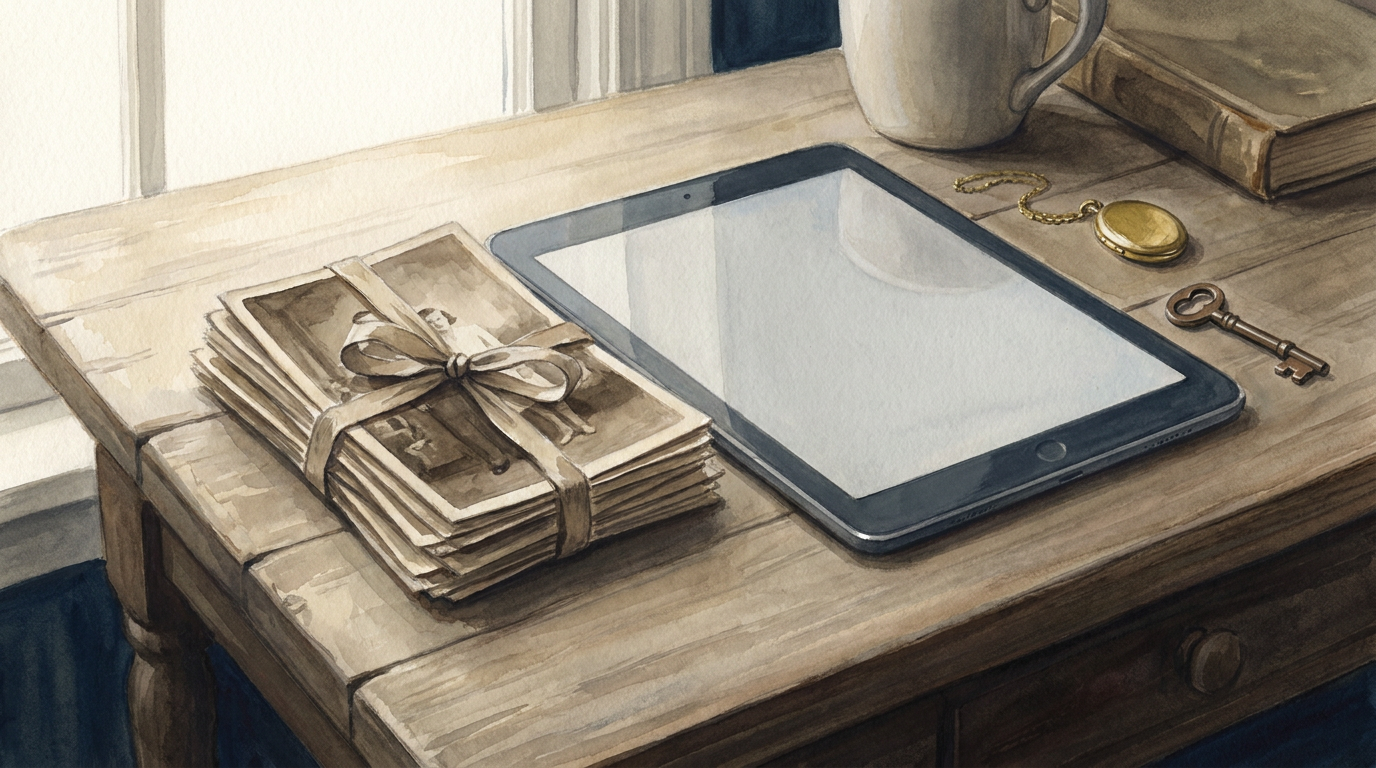
Losing physical belongings to a natural disaster is a profound experience of grief, especially when the loss includes one-of-a-kind family albums. If you are wondering how to recover family photos lost in a fire or flood, the process begins with a shift in perspective: while a charred or water-damaged original may be gone, the image it contained often lives on in the hands of others. Rebuilding a collection is a quiet, methodical journey of gathering these scattered pieces to form a new, digital record.
Assessing the Situation with Care
The immediate aftermath of a fire or flood is often overwhelming. Before attempting to handle any surviving items, ensure the environment is structurally safe. If you find photos that are wet but not destroyed, they can often be saved by professional conservators or by carefully rinsing them in clean water and drying them flat. However, if the physical items are lost, the focus must move to reconstruction through external sources.
This guide provides general information on documenting and recovering heritage and is not intended as legal advice regarding insurance claims or property rights. You should consult with a legal professional in your specific jurisdiction for advice on documenting losses for official purposes.
Where to Look for Surviving Copies
Many families are surprised by how many duplicates of their most precious photos exist outside their own homes. To begin your search, consider these four primary avenues:
1. Extended Family and Close Friends
In previous decades, it was common practice to mail prints to relatives. Your aunt in a different city or a grandmother’s old scrapbook may contain the exact same portraits that were lost in your home. Reach out to family members and explain that you are trying to collect family memories together to restore what was lost. Most people are honored to scan and share their copies when they understand the circumstances.
2. School and Community Archives
If you lost childhood photos, your former classmates may still have their yearbooks or candid photos from school events. Additionally, local historical societies, church registries, or sports clubs often maintain archives that include group photographs. These institutions are frequently willing to provide digital copies to former members.
3. Professional Photographers and Studios
For formal portraits, wedding photos, or school pictures, the original studio may still hold the negatives or digital masters. While many small studios close over time, larger franchises often maintain records for decades. If you remember the name of the photographer who captured a significant event, it is worth a respectful inquiry.
4. Previous Digital Sharing
Check old email accounts, social media profiles, and cloud storage services. Often, a low-resolution version of a photo was shared years ago and remains on a server. While these may not have the quality of the original print, they serve as vital placeholders for the memory itself.
Creating a Centralised Digital Repository
As copies begin to arrive, you will need a dedicated space to organize them. Rather than leaving them in disparate email threads or messaging apps, a memory capsule product allows you to assemble these fragments into a cohesive narrative. By uploading digital scans as you receive them, you ensure that the reconstructed collection is protected against future physical loss.
This process is not just about the images; it is about the stories they tell. When a relative sends a photo, ask them for the context—the date, the location, and the names of the people pictured. Documenting these details alongside the image transforms a simple file into a lasting piece of family history.
Moving Forward with a Digital Legacy
Rebuilding after a disaster is a testament to resilience. While the tactile connection to an original print is difficult to replace, the act of gathering these memories often brings families closer together. It serves as a reminder that a legacy is not just held in paper and ink, but in the shared knowledge of a family's journey.
If you are currently in the process of organizing what remains or planning for the future, you might consider how to plan your own legacy to ensure your stories are accessible to the next generation, regardless of physical circumstances. By taking these steps today, you create a dignified and secure record that can withstand the passage of time and the unpredictability of the elements.
In time, the gaps in your collection may be filled by new memories, and the reconstructed archive will stand as a symbol of your family's ability to preserve what matters most.