Future Library: What a 100-Year Time Capsule Teaches Us About Legacy
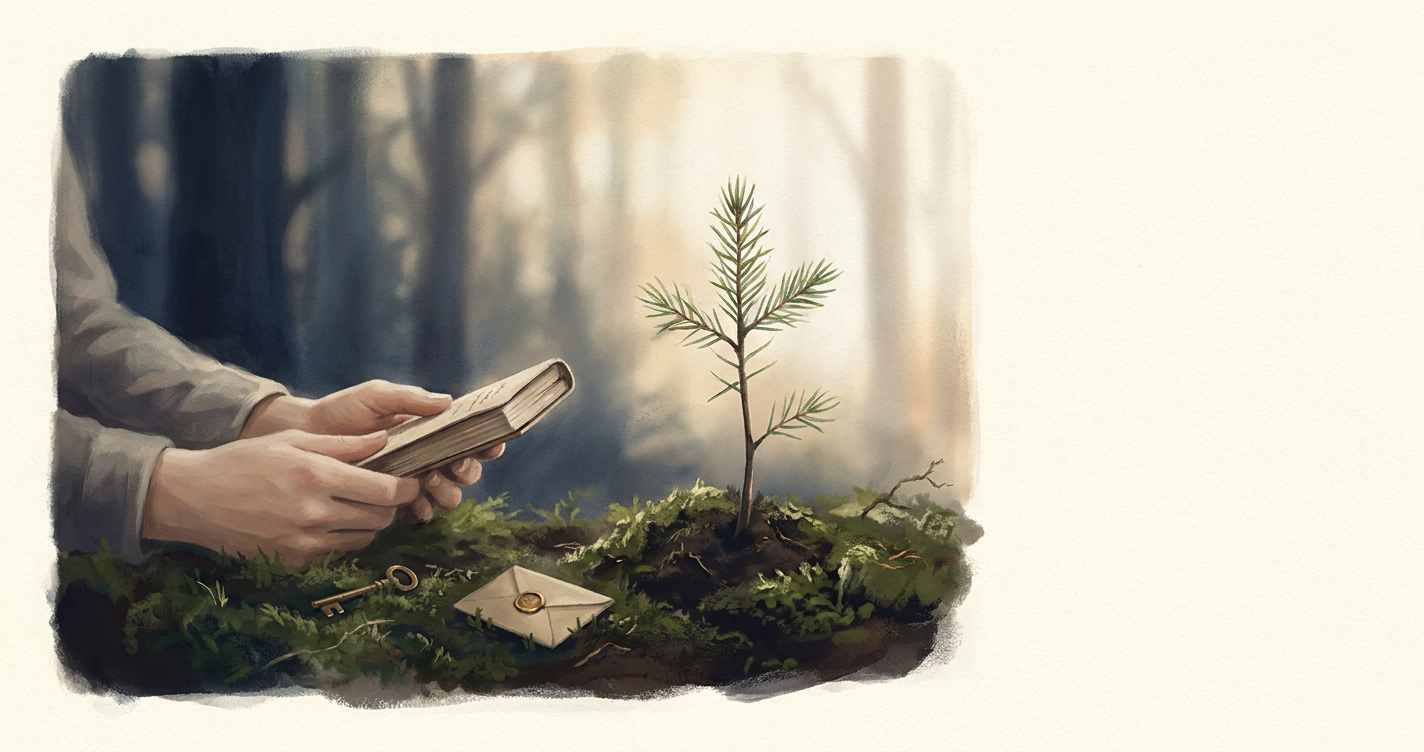
How do we communicate with people who have not yet been born? The Future Library in Oslo, Norway, provides a profound answer through a century-long commitment to literature and nature. This project, known as the world’s slowest time capsule, invites us to consider what it means to plant a seed—both literal and literary—that we will never see reach full maturity.
The Vision of the Future Library Time Capsule
Conceived by Scottish artist Katie Paterson and launched in 2014, the Future Library (Framtidsbiblioteket) is a public artwork located in the Nordmarka forest and the Deichman Bjørvika library in Oslo. The project began with the planting of 1,000 spruce saplings. Every year for 100 years, a writer is invited to contribute a new manuscript. These texts are held in trust, unread and unpublished, until the year 2114.
At the end of the century, the 1,000 trees planted at the project's start will be harvested to provide the paper for printing these 100 manuscripts. This future library time capsule bridges the gap between generations, requiring a level of patience and trust that is rare in our modern, instant-access culture. Authors like Margaret Atwood and David Mitchell have already handed over their secret manuscripts, knowing that their words will only meet a reader’s eyes long after the authors themselves are gone.
A Silent Room for Unseen Words
The manuscripts are housed in the "Silent Room" on the top floor of Oslo’s Deichman library. The room is built using wood from the very forest where the trees are growing. It is a quiet, contemplative space where visitors can see the glass-fronted drawers containing the growing collection of secret texts. The names of the authors and the titles of their works are visible, but the stories themselves remain encased in silence.
This project reminds us that legacy is not always about immediate impact. Sometimes, the most meaningful gifts are those we prepare for a future we will not inhabit. It asks the writer to trust a future audience and asks the public to protect a forest they may not see reach its centennial height.
Creating Your Own Path to the Future
While the Future Library is a grand, institutional endeavor, the impulse to preserve thoughts for the future is a deeply personal one. You may not be writing a novel for a forest harvest, but you may have stories, lessons, or simple messages of love that deserve to be heard by your grandchildren or their children.
Modern technology allows us to mimic this long-term thinking on a personal scale. You can use a memory capsule product to record reflections or store digital keepsakes that are set to be delivered on a specific future date, such as a milestone birthday or a distant anniversary. Unlike a physical box buried in the ground, a digital capsule is protected against the elements and can be managed with the same intentionality as the Silent Room in Oslo.
The Ethics of Long-Term Preservation
Preserving information for a century requires more than just a storage medium; it requires a commitment to maintenance. In the case of the Future Library, a trust has been established to ensure the forest is managed and the library is maintained until 2114.
When planning your own digital legacy, it is important to consider the practicalities of how information is passed down. For those looking to ensure their digital archives remain accessible to their heirs, integrating these intentions into a formal plan is a helpful step. Note that this information serves as a general guide and does not constitute legal advice; you should consult with a professional in your specific jurisdiction regarding the storage of digital assets. Using a memory wall to collect family memories can provide a central, dignified space where these stories are gathered and curated for those who follow.
Writing for an Unknown Audience
The most moving aspect of the future library time capsule is the act of faith it represents. The authors are writing for a world they cannot imagine, using a language that may have evolved, for readers whose lives will be shaped by technologies and events we cannot foresee.
When we leave a message for the future, we are not just sharing information; we are affirming our connection to the human family. Whether it is a manuscript in a glass drawer or a video message in a digital vault, these acts of preservation are a way of saying, "I was here, and I cared enough about you to leave this behind."
In a world that often feels transient, taking the time to build a slow legacy—one that prioritizes depth over speed—is a dignified way to honor our past and gift our future.